The Lowest of Low Rent Margaret Atwoods
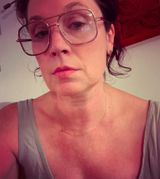
I'm no Margaret Atwood. (That is clear.) But I've bought two houses in California, beat the 98% gender tax of raising venture capital, and am putting two kids through eye-wateringly expensive private schools as a writer by doing what I learned from Margaret.
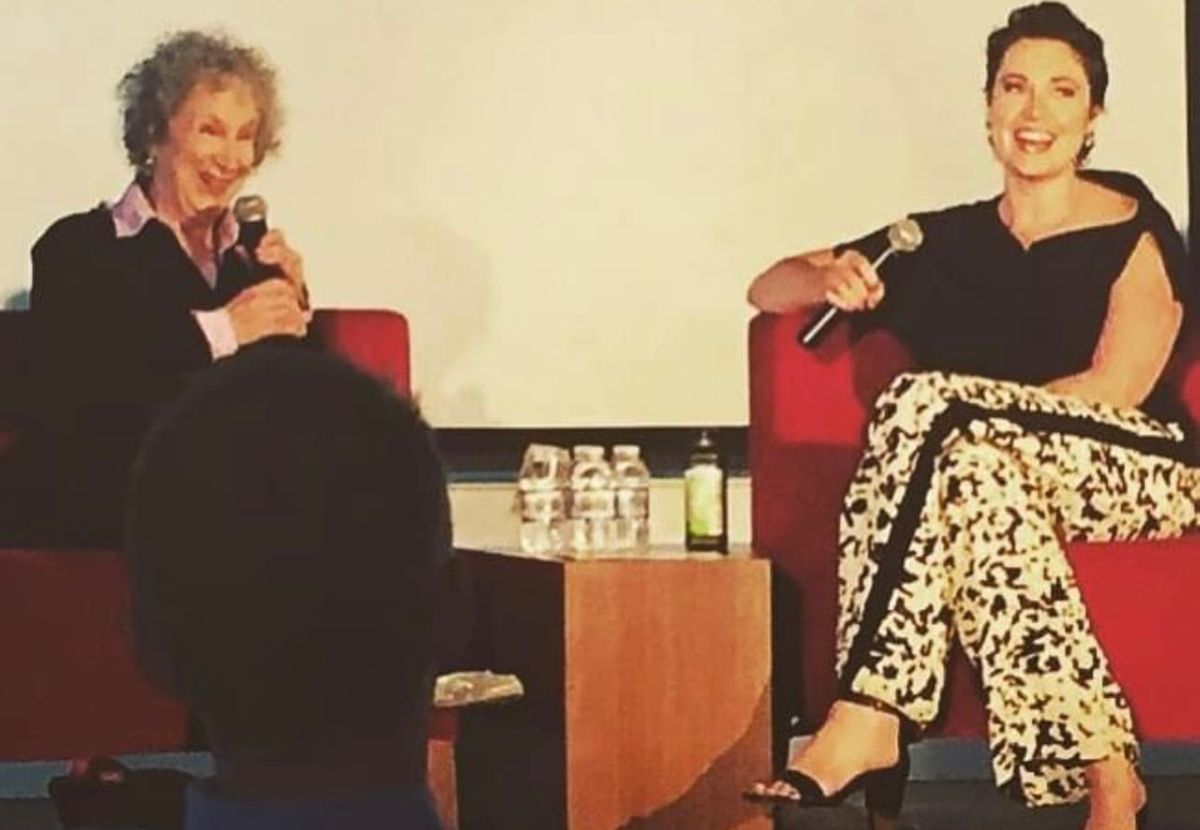
One of the times (#humblebrag) I interviewed Margaret Atwood I asked her if there was ANY genre in which she had not written yet. She's done poetry, comic books, short stories, essays, post-apocalyptic, Shakespeare retellings, noir, historical fiction, coming of age stories, Odyssey retellings way pre-Circe. . . I'm prob forgetting 1,000 others.
She thought for a moment and "Opera" was her answer. Because she had also done a musical, but not opera specifically.
I'm no Margaret Atwood. (That is clear as no one ever will be.)
But one thing I am very proud of is having made a lucrative and successful career as a writer. I've bought two houses in California as a writer. I'm putting two kids through private school in San Francisco as a writer.
I've even beat the 98% gender tax of raising venture capital as a woman with two different startups. My only skills as a CEO/ entrepreneur? Being really networked and being a great storyteller.
"My words bought this house." I say this to my kids at least three times a week.
It's important, because I'm f*cking proud of it, and every time I say it, I'm reminding myself of what I've done. It's important, because I want them to understand how important WORDS and the power of stories are.
But also, it's important, because I want them to understand they can achieve success even in careers people tell them they'll never make money in.
And I've done that not by being better than anyone else. I've done it by being a sort of low rent Margaret Atwood.
Throughout my career young writers have reached out and said, "How do I get to do what you do?" And the answer is "Work your a** off and learn lots of different ways of writing and storytelling."
Books. Keynotes. Blogging. Magazine writing. OpEds. Social Media. On Camera. Interviewing people on stage. Podcasts. Marketing copy. Email newsletters.
You don't get to "I don't do...." a category if you want to make a lot of money as a writer and a storyteller. Or at least that's my path. That's my answer to the question. You do it all.
But that doesn't mean selling out. You do it for yourself, on your terms, and you find the art, the fun, the challenge and the intellectual skill in it. The transferrable intellectual skill in it. That's what makes you good.
Because it's all story telling. It's like cross-training. Being good at each of these is why I'm good at all of them.
There are so many writers who are like "Oh, I hate marketing" or "Oh, I hate social media" or "Oh, I hate sales."
First of all, no one f*cking likes it. You are putting yourself out there to be rejected. That goes against millions of years of survival biology. But guess what? It is all storytelling. Aren't you a storyteller? Then tell that story. Tell that story like your livelihood depends on it. Sing for your supper.
I was talking to a friend the other day whose daughter wants to be a dancer. And she and her wife (extremely successful business) people wince at this. They understandably want something safe for her.
But are the odds worse she'll be successful going after dance? I asked.
"She's really talented! Someone makes it! There are a million ways to make money as a dancer. Maybe she's on Broadway. Someone has to be on every Beyonce and Taylor Swift tour. Maybe she opens a studio that changes kids' lives. Maybe she creates a startup around dance. Maybe she becomes a rockstar Peloton instructor or future equivalent. You can't imagine what form that could take in the future. But if she works hard enough and is talented enough, there's no reason she couldn't turn that into a career."
This has never been the case more than it is now in the age of AI. Because-- as I wrote a few weeks ago-- REVENGE OF THE ENGLISH MAJORS ON THE REVENGE OF THE NERDS TWIST: While software developers fear for their existential futures, writers and story tellers have never been in greater six figure demand. (I recently had a client wrap up, and filled the slot in-- no joke-- 15 minutes. I am working 14 hour minimum days because I have so much truly incredible opportunities I haven't been able to say no to. I can't even think about anything else until at least May. My story is not unique. Silicon Valley companies cannot find enough great storytellers right now. Ironically-- this is driven mostly by AI companies and mega funds investing in AI companies.)
When I tell people they can make money in any profession if they work hard enough and they are good enough they hear that as naive. But what I am also saying is they need to look for opportunity, take risk and be creative. You got into a creative field: Have imagination.
You don't get to the point of making money (millions in net worth if you count my houses. . . I am cash poor, which won't surprise you if you've seen how much private schools in San Francisco cost. . .) as a writer if you have a narrow view of that skillset.
A lot of people who graduated when I did thought it was an unlucky time to get into journalism. I think it was the luckiest time. Sure the Internet's ascendance when I graduated college meant the safe jobs of decades earlier were ripped away.
But what I got was this: Training and mentorship in real, newspaper and magazine journalism and writing that no one gets anymore. Having to compete for fixed column inches. Having to please seven levels of editors before something would get printed -- fixed in print.
I met an illustrator this past weekend who said he learned to draw as a tattoo apprentice. And how the pressure of not missing a line when it was going on someone's body impacted him . . . That's a bit how writing for a publication like Business Week that could move markets was when it was printed on a weekly basis and couldn't be updated.
However, I was so new to journalism when it got disrupted, I didn't have a lot of invested. I could jump ship into blogging and other mediums. I saw quickly that if I was going to keep getting paid as a journalist-- and as the main breadwinner in my family, I needed to, if I didn't want to do something else and I didn't-- I needed to become a Swiss Army Knife reporter.
I needed to learn to be good on TV, good on stage, I needed to get comfortable blogging, I needed to embrace social media, I needed to become a brand even though that meant as a young woman I got shit on online constantly.
I took a risk to quit Business Week when I got my first book deal instead of just taking a safe six-month leave so that I could focus on doing it right.
I took the risk to join a fledgling TechCrunch instead of going back to the old media world when I could have had my pick of jobs.
When I was making more than I ever had before with an on camera job, I quit to go into debt traveling for 18 months for my second book Brilliant Crazy Cocky. I got a tiny advance, but spent a year and a half reporting in emerging markets. I built a skillset that would launch a next chapter of giving keynotes all over the world, more than making that investment back.
And then when I was supposed to be named Editor in Chief of TechCrunch and my job was given away while I was giving birth, instead of taking another highly paid "our bad!" consolation job by AOL, I quit to start Pando.
With both Pando and ChairmanMom, I learned new kids of writing skills that at first I thought were gross, but I later learned to love as their own art form.
Pitch decks. Website copy. And my true art form: Newsletters and email marketing. You think I'm kidding: I love writing marketing copy. Email subject lines are haiku level hard. If you think there's not an art to it, read Lisa Cron's Story or Die. Marketing copy has given me an appreciation for the neurological impact of story telling mechanics in tight iteration cycles.
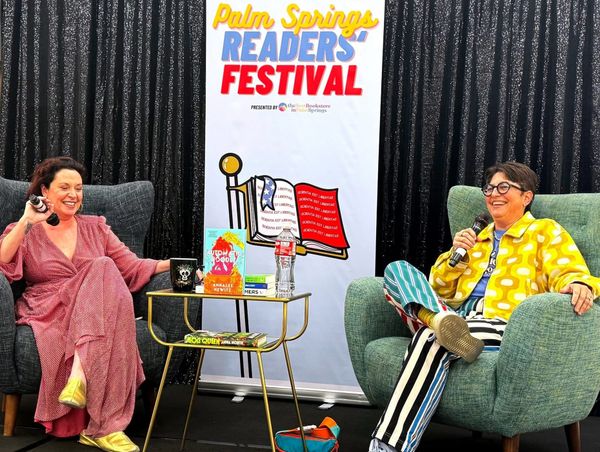
My on-the-job PhD in email marketing is what inspired the "Sarah Cards" in the Best Bookstore. These seemingly silly sharpie-on-neon cards are the stars of every article and have the Google reviews the stores get. We've literally raised $50k from investors just because of these cards. People come into Palm Springs and steal them.
What are they? I'll give you an example.

On top of Utopia Avenue there's a card that reads "The book for dudes who say they don't read fiction" with a drawn emoji rolling its eyes.
On top of When Women Were Dragons "Buy this for a pissed off woman in your life. She'll feel seen."
On top of Malice a 1996 Japanese Mystery, a picture of a Venn Diagram showing Murakami and Dostoyevsky intersecting with Malice in the middle. (Malice is our second best selling book in three years of owning the Palm Springs store. We sell more copies of this somewhat obscure book by US standards than any independent store in America. Because of this card.)
These cards were a fluke. We opened the store on Black Friday three years ago and forgot to put books on the front table. I ran around grabbing books I loved off of shelves and grabbed note cards and a sharpie and wrote "reviews" as fast as I could.
Because I was still running ChairmanMom, I inadvertently wrote email subject lines or "you" based marketing, instead of the usual "look at me!" reviews most bookstores do. (HERE ARE 50 WORDS ON WHY ROBBIE LOVES INFINITE JEST!) I even put the cards on top of the books (literally no bookseller would think to COVER the book) but it essentially makes you "click" on the card to see what the book is.
This is a writing skill I honed that sells millions of dollars of books in our stores every year. Millions of dollars of other people's brilliant words. That's pretty f*cking cool.
Can I tell you the funniest testament to the power of these cards? Kamala Harris's recent book is on my table in Palm Springs. Someone came in the store and got so upset, he went out and bought a sharpie and a note card, came back hours later with his own faux Sarah card, snuck back into the store. His female friend created a dramatic ruse to distract the team, while he replaced my card with an anti-Kamala card on the book. Thank God for security cameras, because the "Incel Bonnie and Clyde" footage as Paul called it is every bit as as funny as it sounds.
That was six months ago. Guess what? Last week, during the Indian Wells Tennis Tournament when more conservative tourists came to town? Someone did it AGAIN. Different handwriting and less artfully done. Simply: SHE LOST.
That is the power of the Sarah cards. Twice someone came in the store; got so upset that the Sarah card might make that book sound good; that they left, bought supplies; wrote their own cards; came back; created a ruse and swapped the card.
And of course, now, I make money helping other people find their voice (or at least find agents and book deals) as authors. It's absolutely the most rewarding, most fun work I've ever done.
Recently, I've become obsessed with how my friend Alan Cruz is able to effortlessly make the LinkedIn algorithm his b*tch. It's a storytelling skill I don't have that I'm trying to understand.
You know what I would love to do next? My Margaret Atwood "opera"? I want to write a Sleep Story for Calm. Paul and I were recently talking about the psychology behind them. There is a particular art to how they make you fall asleep. The vowels get longer the deeper it gets in the story, the sentences more lyrical. And Paul noticed last week when he couldn't sleep: They start to weave nonsense images into sentences to trick your brain into thinking you are already dreaming. I bet there is so much amazing psychological sh*t they are doing there we don't even know. I have never once used Calm for meditation but I would pay double for the App because it is the only thing -- sleeping medicine included-- that helps me sleep. (I have listened to "The Yard Sale" at least 100 times and never made it to the end. It is a sleep story work of art.)
I'm happy to be a low-rent Margaret Atwood. I'll never write novels; my business books won't become TV shows; and you won't read an email newsletter subject line and applaud.
But I'd argue the fact that I see the art in these makes me a bigger writing nerd. Because it's not about the glory. It's about the very granularity of the words and what they can do in the right combinations. How 26 characters can be endlessly reconfigured to change our actions and our lives.
(And, oh yeah, putting my kids through college is no joke.)